Tuesday, May 24, 2011

Inside Foxconn's deadly iPad factory after the blast


As reported at EETimes, three workers died and 15 more are injured as a result of an explosion at a iPad manufacturing factory in Chengdu, China, belonging to Taiwanese electronics manufacturer Foxconn, Apple's close OEM partner. The cause of the explosion, which happened on the evening of Friday, May 20, is reported to have been a combustible dust mixture in a duct. CNET has some full reporting on what observers found as they entered the plant after the deadly blast. Some observers believe that the incident could cost Apple upwards of 500K tablets.


Tuesday, May 17, 2011

Tablet HDTV display glimpsed at SID 2011


Samsung is unveiling a prototype 10.1-inch, high-resolution LCD designed for tablets at the SID Display Week 2011 International Symposium this week at the Los Angeles Convention Center. The manufacturer claims the prototype is the first 300-dpi, high-resolution display in the 10.1-inch tablet format, as reported by InformationWeek. While it is still a prototype, Samsung expects the screen -- which requires 40% less power than traditional RGB displays -- to be commercially available for HDTV tablet applications later this year.


Thursday, May 12, 2011

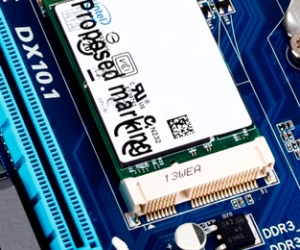
Gigabyte turns up on-board mSATA connections

UK tech blog bit-tech reports that motherboard house Gigabyte is positioning a line-up of future Z68-based motherboards that include an onboard mSATA connection, allowing the user to plug a small SSD card directly into the motherboard. Pretty convenient. Eleven motherboards based on the Z68 Express chipset were introduced this week, and more are on the way, according to Tech Connect Magazine, including four model that include an extra connectivity option, an mSATA port. Ah, the motherboard wars...gotta love 'em.


Tuesday, April 19, 2011

National Defense: Army, Marines face uphill battle to lighten troops’ battery load

National Defense Magazine.org has the story: "Before they go on a mission, soldiers typically want fresh batteries, and they don’t want to have to bring them back. Another nuisance about rechargeables is that each electronic gadget requires specific chargers and batteries that are made by different companies so soldiers end up with a rat’s nest of wires and connectors."

(Ed. Note: We'll have to keep an eye out for more solar battery connector / DC power interconnect -type products and newslets to add to ICW's renewable energy connectivity coverage. The article mentioned here also presents a tidy case example of interconnect technology crossover involving a military application. -- MV)

The article continues, “Soldiers don’t like to recharge because they don’t have portable means to do so, and they have to go back to their base,” said Paul Dev, an energy expert at D-STAR Engineering. Soldiers do not like to carry their dead batteries for an entire mission. Dev said one of the drawbacks of current rechargeables is that they have two-thirds to one-half the energy density of disposable batteries."

"Improving the energy density is essential to making the shift to renewable sources, Schilke said. “We have to learn how to harvest more solar energy,” he said. “We also have to get more efficient at storing.”

"In most areas where U.S. forces deploy, sunlight is plentiful. But garnering that energy will require not only better solar power collectors but also substantial improvements in storage devices, namely, batteries. A shift to renewable energy would require that soldiers embrace rechargeable cells. That, in itself, may be a bridge too far, considering that most soldiers prefer the throwaway type."

"The physics of improving batteries seem rather simple — packing the most amount of energy at the lowest amount of weight. But for most military applications, the most efficient batteries are disposable. That issue alone creates a significant disadvantage for solar energy efforts, as it will require soldiers to trust rechargeable batteries."

Related Renewable Energy Coverage at ICW:


Thursday, April 14, 2011

Mapping the debate over universal electric car plug standards

In Europe, debate is raging over a common standard for the charging plugs used on electric cars. There are this week reports of "industrial jealousy" between French/Italian and German factions and controversy over the settling of a common European standard. Meanwhile, international competition among Germany, France, the UK and Italy is tightening, especially since the formation of the EV Plug Alliance last year. TheGreenCarWebsite.co.uk's The Green Piece breaks the situation down even further in an informative tech blog.


Monday, April 11, 2011

Dutch inventor debuts electric, extreme-speed 'SuperBus'


An inventor in the Netherlands has developed an electric "super bus" that can carry 23 passengers and reaches top speeds of 250 km/h. The vehicle is the creation of Wubbo Ockels, the Netherlands' first astronaut and currently a professor of aerospace sustainable engineering and technology, as reported by the BBC. The inventor's aim is for the bus -- which cost 13m euros to develop -- to become a new form of public transportation. Ockels will reportedly display the bus at an upcoming trade fair in Dubai.

Wednesday, April 6, 2011

Forbes lays out supply chain lessons from Japan

The business gurus at Forbes have made the call: "If there was any doubt left about the impact of globalization of the supply chain, the news [from Japan] should make it crystal clear: supply chains today are attenuated and extremely vulnerable to repercussions from events far outside the control of those who manage and rely on them."

Forbes' CIO Network columnist Paul Martyn concludes that while "there’s much hope – and a lot of evidence – that Japan will recover quickly from this disaster, what global supply chains look like on the other side is widely unknown"; and, that "one thing is for certain: the disruption provides more than enough evidence of the need to revisit supply chain strategies with a focus on resiliency and flexibility."